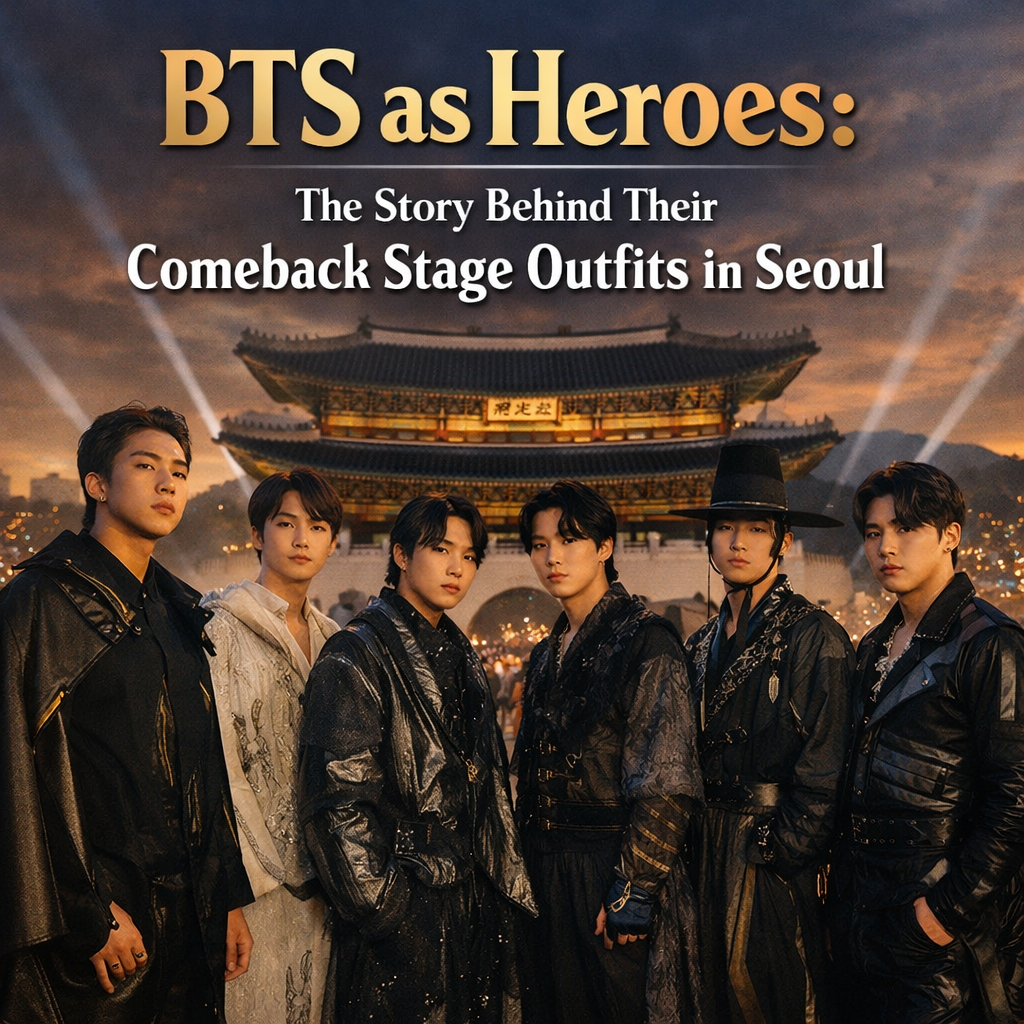
BTS’s comeback stage in Seoul was not only a major music event, but also a striking fashion moment. Korean designer Songzio, who created the group’s performance outfits, revealed that the main concept behind the wardrobe was “heroes.” He explained that he reinterpreted BTS as figures leading Korean culture toward a brighter future.
This idea gave the stage costumes a deeper meaning. They were not designed simply to look fashionable under bright lights. Instead, they were created to reflect symbolism, identity, and movement, all while matching the energy and global image of BTS.
A Meaningful Collaboration
According to Songzio, this project was especially meaningful because, while he had collaborated with BTS before, this was the first time they worked together from the planning stage. He also noted that it was significant for a Korean group representing the country on a global level to choose a Korean brand for such a historic performance.
That detail adds another layer to the story. This was not just a celebrity styling project. It was a creative collaboration that connected music, design, and cultural identity from the beginning.
Each Member Had a Distinct Character
One of the most interesting aspects of the styling was that every BTS member was assigned a different concept. RM was presented as the “hero,” Jin as the “artist,” Jimin as the “poet,” Suga as the “architect,” Jungkook as the “pioneer,” J-Hope as the “sorikkun,” and V as the “noble young scholar.”
This approach allowed each outfit to carry its own narrative while still keeping the full group visually united. Rather than dressing all seven members in one identical style, the design gave each person a clear identity within a larger artistic framework.
Modern Korean Aesthetics Reimagined
Songzio explained that both BTS and his brand share a similar creative direction: the modern reinterpretation of Korean elements. He said their artistic philosophies align in the way they express Korean history and emotion through a contemporary visual language.
The fabrics used in the costumes were also developed in Korea. Cotton, linen, and handwoven materials were selected to create a texture reminiscent of the brushstrokes seen in traditional Korean landscape painting. As a result, the outfits felt culturally grounded while still looking modern and performance-ready.
This balance between tradition and innovation is one of the key reasons the costumes stood out. They were not simply inspired by Korean heritage in a superficial way. Instead, they attempted to translate traditional Korean beauty into something dynamic and relevant for a global stage.
From Armor-Inspired Designs to Fluid Motion
The design process was not simple. Songzio revealed that the team initially considered costumes inspired by traditional armor. However, those layered and structured forms created limitations for stage movement and performance.
Because BTS is known for choreography and live performance intensity, that approach was eventually revised. Instead, the final designs reflected the fluidity of hanbok. By emphasizing softer movement, flexibility, and transformable structure, the team was able to preserve visual drama without sacrificing performance practicality.
This shift shows how carefully the costumes were developed. Stagewear for artists like BTS must do more than look impressive in photos. It also has to function during live performance, support choreography, and remain visually powerful from every angle.
Transformable Details Added Performance Value
Some of the garments included transformable features that made them part of the stage storytelling itself. J-Hope wore cargo pants that could be turned into shorts using zippers, while RM wore a jacket that could be opened into a cape-like shape.
These details added movement and theatrical effect, allowing the outfits to interact with the performance rather than simply existing as static fashion pieces. It also reinforced the idea that the costumes were designed for both symbolism and live stage impact.
A Broader Cultural Message
What makes this collaboration especially compelling is that it reflects more than personal style. The costumes were built around the idea of Korean identity presented in a bold, modern, and globally understandable way. Through materials, silhouettes, and storytelling, the collection connected BTS’s international presence with Korean artistic tradition.
That is why the hero concept felt effective. It framed BTS not only as performers, but also as cultural figures carrying Korean creativity to a worldwide audience.
Possible Future Collaboration
Songzio also hinted that this partnership may continue. He mentioned discussions related to a world tour collaboration and the possibility of developing costume ideas that reinterpret the Korean flag.
If that happens, this Seoul comeback stage may be remembered as the beginning of a larger creative relationship between BTS and the designer.
Final Thoughts
BTS’s comeback outfits in Seoul were memorable not only because they looked visually powerful, but because they carried meaning. By presenting the group as heroes and blending Korean heritage with modern stage fashion, Songzio created costumes that felt emotional, symbolic, and performance-driven at the same time.
In the end, the designs reflected what BTS continues to represent on the world stage: a group capable of transforming Korean culture into something contemporary, moving, and globally resonant.
BTS, BTS comeback, BTS fashion, BTS stage outfits, Songzio, K-fashion, Korean fashion, Seoul comeback stage, Gwanghwamun performance, BTS costumes, RM, Jin, Jimin, Suga, Jungkook, J-Hope, V, modern hanbok, Korean design, stage fashion